
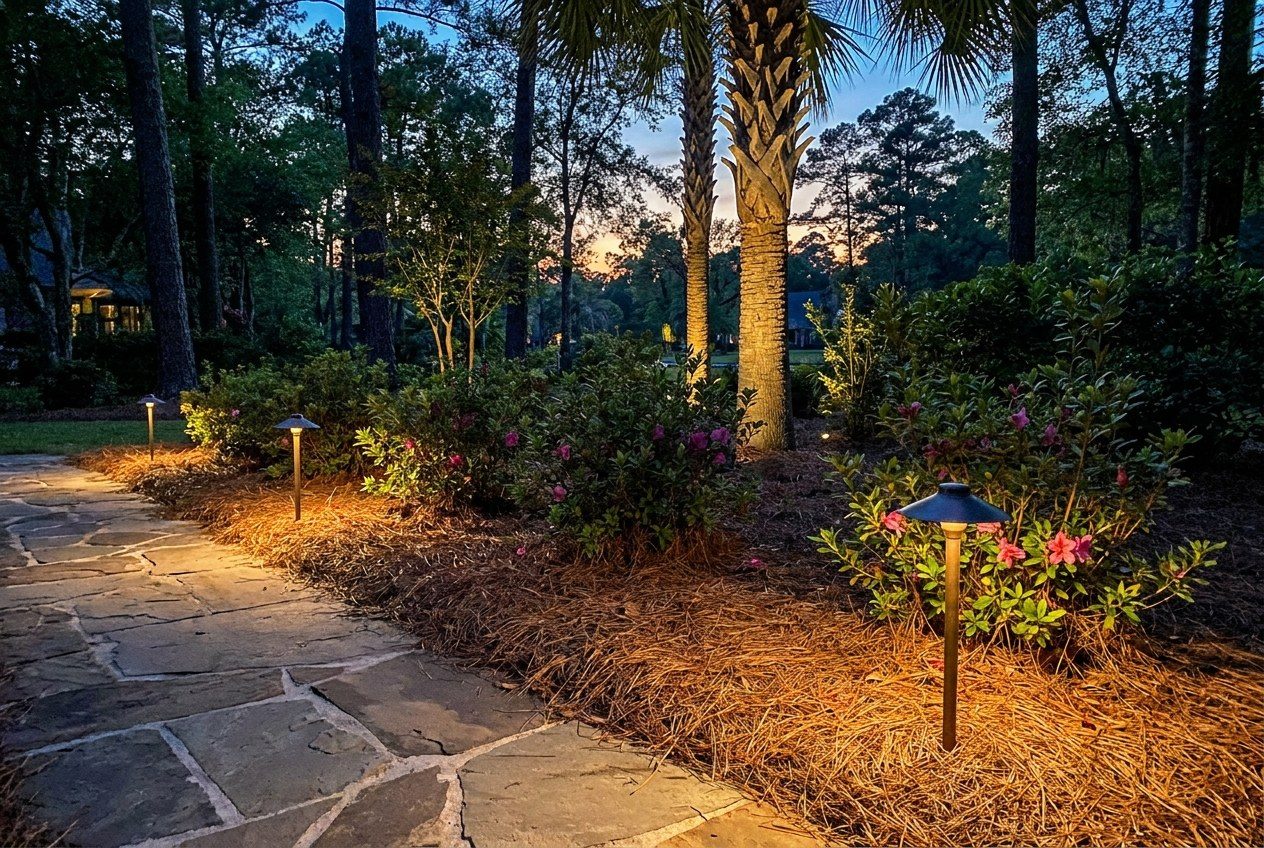
Understanding why replenish mulch in fall after summer matters starts with a simple reality: winter is exactly when plant roots need an insulating layer the most, and summer just spent three or four months destroying it. Walking past thin, depleted beds without topping them up is one of the quietest mistakes a homeowner can make, because the damage shows up months later and rarely gets traced back to the actual cause.
- Summer heat speeds up organic mulch decomposition, often leaving beds dangerously thin by the time fall arrives.
- A depleted mulch layer heading into winter cannot regulate soil temperature or retain moisture the way roots need it to.
- For coastal fall conditions, a refreshed depth of two to four inches is the practical target for most ornamental beds.
- Skipping fall replenishment leaves roots exposed to freeze-thaw stress that compounds through winter.
- Choosing the right mulch type for a coastal climate matters as much as getting the depth right.
#Why Does Summer Break Down Mulch So Fast?
Organic mulch decomposes faster when soil microbes are active, and soil microbes are most active when it is warm and moist. Summer gives them both. The heat of July and August drives microbial activity into overdrive, breaking down wood chips, shredded bark, and pine straw from the bottom of the pile upward.
At the same time, UV exposure from long summer days bleaches and weakens the surface fibers. Rain events compact the layer. Foot traffic flattens it. What started at three inches in May can easily measure under an inch by September, sometimes less in spots where water pools and erodes the material toward bed edges.
That color fade you see in late summer is more than cosmetic. Bleached mulch fibers have already lost much of their structural integrity, which means they compact and mat more easily and offer less insulation value going into colder months.
Coastal regions add another layer of stress. Humid air near the water keeps organic material damp for longer stretches, which accelerates fungal breakdown alongside microbial decomposition. If your property sits close to salt air, the mulch cycle moves faster than it does a few miles inland.
#What Does a Thin Mulch Layer Actually Fail to Do?
A layer under an inch thick stops doing its three main jobs: temperature regulation, moisture retention, and weed suppression. Each of those failures costs you something real.
Temperature regulation is the one that matters most heading into fall and winter. Mulch acts as a blanket between the air above and the root zone below. Without it, soil temperatures swing more dramatically with each cold snap and warm spell. According to the Penn State Extension, maintaining a proper mulch layer moderates soil temperature fluctuations that can otherwise damage feeder roots and dormant crowns.
| Mulch Depth | Temperature Buffering | Moisture Retention | Weed Suppression |
|---|---|---|---|
| Under 1 inch (depleted) | Minimal, soil exposed to hard freezes | Poor, dries out quickly between rain | Ineffective |
| 2 to 4 inches (refreshed) | Effective buffer against freeze-thaw cycles | Holds moisture between rain events | Blocks most weed germination |
Moisture retention is the second failure. Roots still need water through fall and into early winter, even as the plant looks dormant above ground. Bare soil loses moisture to wind and sun far faster than mulched soil does. In a coastal climate where dry spells can follow storms without much warning, that unprotected root zone dries out quickly. If you have an irrigation system in place, a depleted mulch layer forces it to work harder to compensate for the accelerated moisture loss.
#How Deep Should Fall Mulch Be in a Coastal Climate?
Two to four inches is the target for most ornamental beds in a coastal setting. Two inches is the functional minimum for temperature and moisture benefits. Four inches is the ceiling before you risk smothering shallow roots or creating habitat for pests and fungal issues against plant crowns.
The specific number within that range depends on what you are mulching. Perennial beds with shallow-rooted plants do well closer to two inches. Deep-rooted shrubs and young trees benefit from a full three to four inches pulled back a few inches from the base of the stem or trunk, never piled against the bark, which invites rot and rodent damage.
Push a finger or a pencil into your existing mulch bed. If it hits firm soil in under an inch, you are below the functional threshold and replenishment is overdue before the first hard frost.
#Which Mulch Type Works Best for Fall Replenishment?
Shredded hardwood bark and aged wood chip blends are the most practical choices for fall replenishment in most coastal beds. They break down slowly enough to hold through winter, interlock well against wind, and add organic matter to the soil as they decompose over the following year. For a full look at how mulch selection fits into broader bed preparation, the planting and mulching process covers material choices alongside planting decisions that affect long-term bed health.
Pine straw is a reasonable alternative for acid-loving plants like azaleas and camellias, which are common in coastal landscapes. It is lightweight, which can be a drawback in exposed, windy spots near the water, but it allows better air circulation around crowns.
- Shredded hardwood bark: dense, slow to decompose, good wind resistance
- Wood chip blends: excellent insulation, adds soil nutrients as it breaks down
- Pine straw: good for acid-loving plants, lighter and faster to apply
- Dyed mulch: longer color retention but check that the dye source is plant-safe
Avoid piling on fresh, unaged wood chips in large quantities right before winter. Fresh chips consume nitrogen as they decompose, temporarily pulling it away from plant roots at a time when you want the soil stable and nourishing, not in flux.
#Is Fall the Right Time to Replenish, or Can It Wait Until Spring?
Fall is the right time because the goal is to protect roots through winter, not to make the beds look fresh for spring planting. Waiting until spring means roots spend months cycling through freeze and thaw without insulation, and whatever moisture the soil holds during dormancy is lost to evaporation and wind.
Spring replenishment still makes sense as a light top-dress once winter is over. But the heavy replenishment, the two to four inch refresh that replaces what summer broke down, belongs in fall, ideally before overnight temperatures drop consistently below freezing in your area.
In coastal areas, the timing window is generous. Mild maritime temperatures often push the hard-freeze deadline later than it would be a few miles inland, which means there is usually a comfortable stretch in October and into November to get beds refreshed without rushing.
#Common Questions
Can I just add mulch on top of what is already there?
Yes, topping up existing mulch is the standard approach as long as the old layer is not matted or hydrophobic. Rake the existing material lightly to break up any compacted crust, then add fresh mulch to bring the total depth to two to four inches. If the old material has turned into a dense, water-repelling mat, remove a portion of it before adding new material so moisture can actually reach the soil below.
How close to plant stems can I apply mulch?
Leave a gap of at least two to three inches around the base of shrubs and the trunk flare of trees. Mulch piled against bark traps moisture against woody tissue, which creates conditions for rot and can attract rodents looking for nesting material and gnawing opportunities during winter months.
Does mulch replenishment help with weeds in spring?
A refreshed two to four inch layer suppresses most weed seed germination by blocking light from reaching the soil surface. It will not eliminate weeds entirely, particularly from seeds that blow in on top of the mulch after application, but it reduces spring weed pressure significantly compared to thin or bare beds heading into winter.
Is there a mulch type I should avoid near the coast?
Lightweight materials like pine straw or fine compost can be problematic in exposed coastal beds where wind is a regular issue. They scatter more easily and may need to be secured with a light layer of heavier bark on top, or reserved for beds with good windbreak protection from structures or existing plantings.
If your beds are looking thin heading into fall and you want a second set of eyes on what the right approach is for your specific plants and soil, the team at Coastal Bloom Landscaping LLC is happy to take a look and talk through your options.